
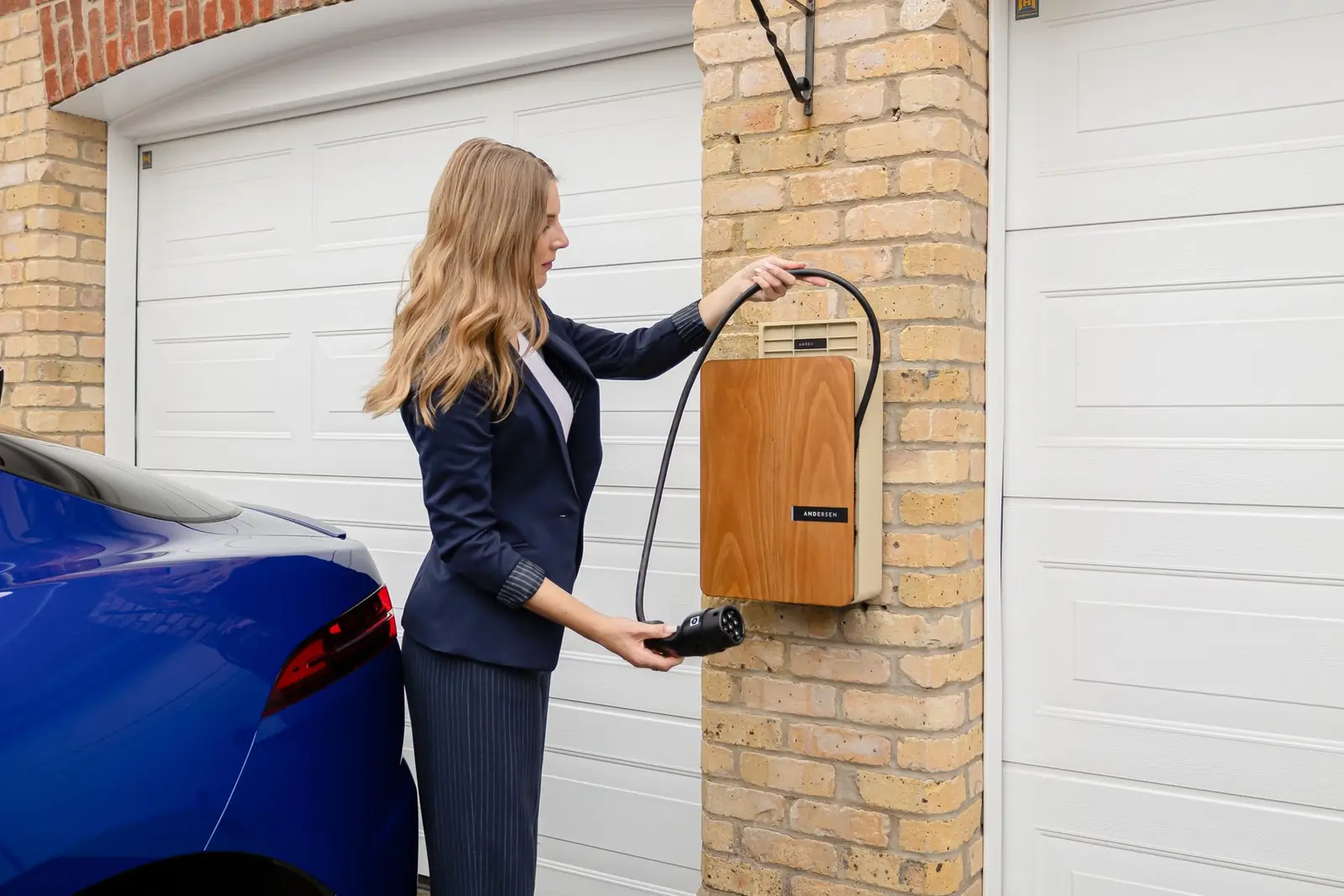
Short answer: In Temecula, a Level 2 (240V) EV charger needs an electrical permit and inspection from the City of Temecula. The submittal includes a site plan, partial floor plan, single-line diagram, panel load calculation with panel schedule, equipment spec sheets and the city's EV checklist CD-44. The circuit must be dedicated and sized at 125 percent of the charger's output. Level 1 charging on an existing, permitted outlet needs no permit.
1. Level 1 vs Level 2: which needs a permit?
Level 1 charging uses a regular 120V outlet. The City of Temecula says no permit is needed if the outlet is already installed and was previously permitted. It adds only a few miles of range per hour, which works for plug-in hybrids and short commutes.
Level 2 charging runs on 240 volts, like a dryer or range. It needs a new or dedicated circuit, so it needs an electrical permit and a city inspection. Most EV owners in Temecula choose Level 2 because it refills a typical commute overnight.
2. The City of Temecula permit checklist
The city's residential EV charging page lists what to submit. Your electrician usually prepares all of it and applies online through the Citizen Self Service (CSS) portal at TemeculaCA.gov/CSS.
Building permit application
Filed online for the electrical work.
Site plan
Shows the house, the panel and where the charger goes.
Partial floor plan
The garage or parking area layout.
Single-line diagram
The circuit path from panel to charger, with breaker and wire size.
Panel load calculation and schedule
Shows the existing service can carry the new load.
Spec sheets and checklist CD-44
Charger data and the city's EV checklist, based on guideline CD-42.
After the work is done, the inspection is requested online. The inspector checks the circuit, breaker, wire, grounding and installation against the approved plans.
Want the paperwork handled for you? A licensed electrician prepares the full submittal.
Call 877-847-60843. California's streamlined EV permit law
California Government Code 65850.7, from AB 1236 (2015) and updated by AB 970 (2021), requires cities to offer a streamlined, nondiscretionary review for EV chargers, with an online checklist and electronic submittal. According to a 2025 California Attorney General legal alert, an application is deemed complete within 5 business days, and approval for up to 25 chargers is due within 20 business days. Cities also cannot make approval depend on HOA approval.
4. Breaker, wire and charger sizing
EV charging is a continuous load, so the circuit is sized at 125 percent of the charger's output under NEC 625.41. That is why a 48 amp charger needs a 60 amp breaker.
| Charger output | Breaker | About | Notes |
|---|---|---|---|
| 24A | 30A | 5.8 kW | Fits tight panels |
| 32A | 40A | 7.7 kW | Covers most commutes overnight |
| 40A | 50A | 9.6 kW | Highest for a NEMA 14-50 plug-in |
| 48A | 60A, hardwired | 11.5 kW | Needs real panel headroom |
Plug-in chargers on a NEMA 14-50 outlet need GFCI protection under current code. Hardwired chargers avoid outlet wear and are usually the better long-term choice in a garage.
5. Will your panel handle it? A worked example
One accepted way to check an existing home (NEC 220.87) uses your highest measured demand over a year, adds 25 percent, then adds the new load. Here is a simplified example. Your electrician uses your real numbers.
If the numbers do not fit, there are 3 common paths: set the charger to a lower current, add a listed load management device that pauses charging when other big loads run, or plan a panel upgrade with SCE.
6. HOA rules under California Civil Code 4745
Many Temecula neighborhoods have an HOA. California Civil Code 4745 says an association cannot prohibit or unreasonably restrict installing an EV charger in an owner's garage or designated parking space. The HOA can set reasonable standards, and the owner pays for installation and related costs. Submit your request in writing and keep a copy.
7. Charge smarter on SCE rates
Temecula is served by Southern California Edison. On SCE's time-of-use plans, 4 to 9 pm is the most expensive window, and it is also when AC runs hardest. Scheduling the car to start charging after 9 pm usually lowers cost and panel load. SCE also offers EV rate plans worth comparing on sce.com.
Rebates change often. As of October 2026, SCE's Charge Ready Home program offers up to $1,000 for an EV outlet, or up to $4,200 with a panel upgrade, for income-qualified households or homes in disadvantaged communities. The IRS says the federal 30C credit does not apply to charging equipment placed in service after June 30, 2026.
8. Quick checklist before you buy a charger
- Photo of your panel label (brand, amps, open spaces)
- Distance from panel to where you park
- Your car's onboard charger rating (no need to buy more than it can take)
- NACS (J3400) or J1772 connector, or an adapter
- HOA request submitted if any exterior work is involved
- A licensed C-10 electrician to pull the City of Temecula permit
FAQs
How long does a Temecula EV charger permit take?
California law sets a 5 business day completeness review and a 20 business day approval timeline for streamlined EV permits. Simple residential installs are often faster. Ask your electrician for the current turnaround.
Can I install a Level 2 charger myself?
A Level 2 charger needs a new 240V circuit, a permit and an inspection. It is work for a licensed electrician.
Do I need a 48 amp charger?
Most daily driving is covered by a 32 amp charger on a 40 amp circuit overnight. Choose 48 amps only if your car and panel support it and you need the speed.